

Recording Studio | Live Sound & Recording | Video Streaming
Located in Acton, MA
NEWS FLASH!! Kudos to Wellspring clients Esperanza Spaulding and Mia Friedman! Esperanza's debut major label album, recorded at Wellspring , just helped win her the "Best New Artist" award at the 2011 Grammy Awards! Mia recently won the John Lennon Songwriting Competition in the folk category for her song "Across the Water" which is part of the album "Unruly Heart" recorded at Wellspring with her sister Ariel. Congratulations folks, and thanks for making us look good!
Esperanza Spalding | In The Studio
We're a full-service multitrack studio combining vintage and state-of-the -art gear, a huge and flexible live recording space, and a fantastic collection of instruments and drums that is guaranteed to make for exciting and inspired recording sessions. We specialize in high-quality
recording, mixing, and mastering of all types of music; especially rock, folk,
blues, jazz, and alternative. We started as a four-track cassette project studio
in 1984, and have always been known as a place where working musicians on tight
budgets could get great value for their money. Over the past 25 years, we've
expanded the studio to where our equipment, engineering skills, and quality of
product are second to none in New England.
We've done this through hard
work, dedicated service, constant upgrading, and our relentless pursuit of
finding the best gear for playing, recording, and producing great music.
Wellspring's staff are still working musicians. We love to record music and it
shows. At Wellspring we understand what it takes to provide a successful studio
experience and have built and continued to improve our studio with input from
the musical community. Many young artists and groups, including Tracy Chapman,
Dar Williams, Esperanza Spaulding, Martin Sexton, Catie Curtis, Angry Salad,
Vance Gilbert, and others have launched their careers with Wellspring
recordings, and we are honored by their presence in our
house.
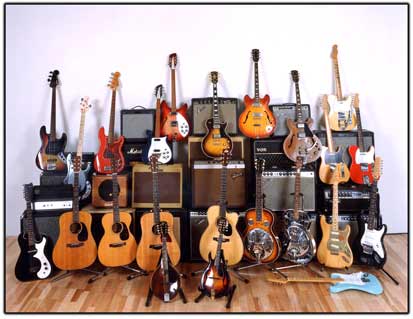
One unique aspect of Wellspring is its large selection of
instruments and amplifiers: over 90 guitars and amps, two Yamaha 7 foot grand
pianos, and 7 keyboards in all. Included in our collection are many classic
acoustic guitars, vintage electric guitars, basses, and amps, as well as
contemporary instruments and amps that we love. Players of all stripes are often
delighted to discover a new sound on some piece of Wellspring gear that they
hadn't thought of before. Everything we own is well-maintained, and there's
never a rental fee for any of our instruments.
 Individuals and bands looking to track great sounds for later outside editing/mixing have found a welcome home at Wellspring. Our large, versatile space, 29 Neumann microphones, 40 tube and ribbon microphones, 2 grand pianos, over 65 boutique mic preamps, and superb-sounding RADAR and Lynx converters make for fabulous sounding tracks in whatever format you're using. We can record at least 32 tracks simultaneously in 24 bit at sample rates up to 192 khz.
From our first 4-track demo for Tracy Chapman in 1984, to recent sessions with engineering legend Eddie Kramer (Hendrix, Led Zeppelin, Van Halen etc), Wellspring has delivered the goods for far less than one would pay at comparably equipped studios. With over 50 Boston Music Awards and Nominations, our clients know that what they do here will be well received by the rest of the world.
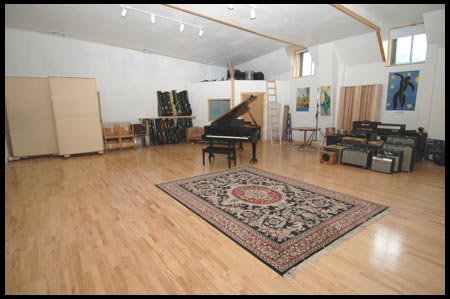 In July 2000, Wellspring moved to its new 4000 sq ft facility in Acton. The new studio A features a 40´ x 35´ live room with maple floors and 12´ - 14´ ceilings, a 22´ x 25´ acoustically-designed control room with 1/2" and 1" mixdown decks, and 4 iso booths of various shapes and sizes. Wellspring's new studio B now features a comfortable 14´ x 18´ control room and a 13´ x 14´ live room. The recent installation of a 56 input Sony DMX-R100 digital console in studio B, along with additional equipment upgrades, now makes the room an excellent mixdown choice as well. Other features of the new facility include 2 lounges, free parking, easy load-ins and environmentally-hip construction and building materials.
Wellspring features state-of -the- art ProTools systems in both studios, and we use Apogee Symphony Mk2 and Lynx Aurora AD/DA systems for the finest digital sounds possible. In the fall of 2023, we replaced our 35 year old Neotek Elite console with an all-discrete 16 channel Chandler rack mixer, which provides a rich, powerful, Neve-like sound to the A studio mixes. In addition to changing the mixing surface, we completely redesigned the control room and reorganized the patchbay so that everything is better organized and much more intuitive for engineers using the room for the first time. Freelance engineers have been giving it a big thumbs-up!. Studio B is now mixing projects through a Great-River 20 channel Mixmaster 20 system, which is similar in design and overall sound to the Chandler system.
Wellspring Sound also offers live sound reinforcement and live recording services at venues from 200 to 5000 people. We do live theater and conference sound with up to 16 independent wireless microphones. We can record live shows of up to 72 tracks, and have over 40 channels of boutique class A mic preamps available as needed for live use. We are the first sound company in Massachusetts to offer a totally solar-powered festival-quality sound system. We also provide backline for many events, supplying drums, amps, keyboards, and instruments. Click the Live Sound/Recording tab above for more information.
Green energy update: January 2024: WIth the installation of a new Bosch heat pump for studio A, Wellspring now has become a totally fossil fuel-free recording studio. We get all our electricity from renewable sources, and we now longer use natural gas to heat the building. As far as we know , we're now the only all-green recording studio in New England !
We hope you enjoy our website. Please feel free to contact us at (978) 263-9246, cell phone at (978) 621-1298, or by email at eckilburn@gmail.com.